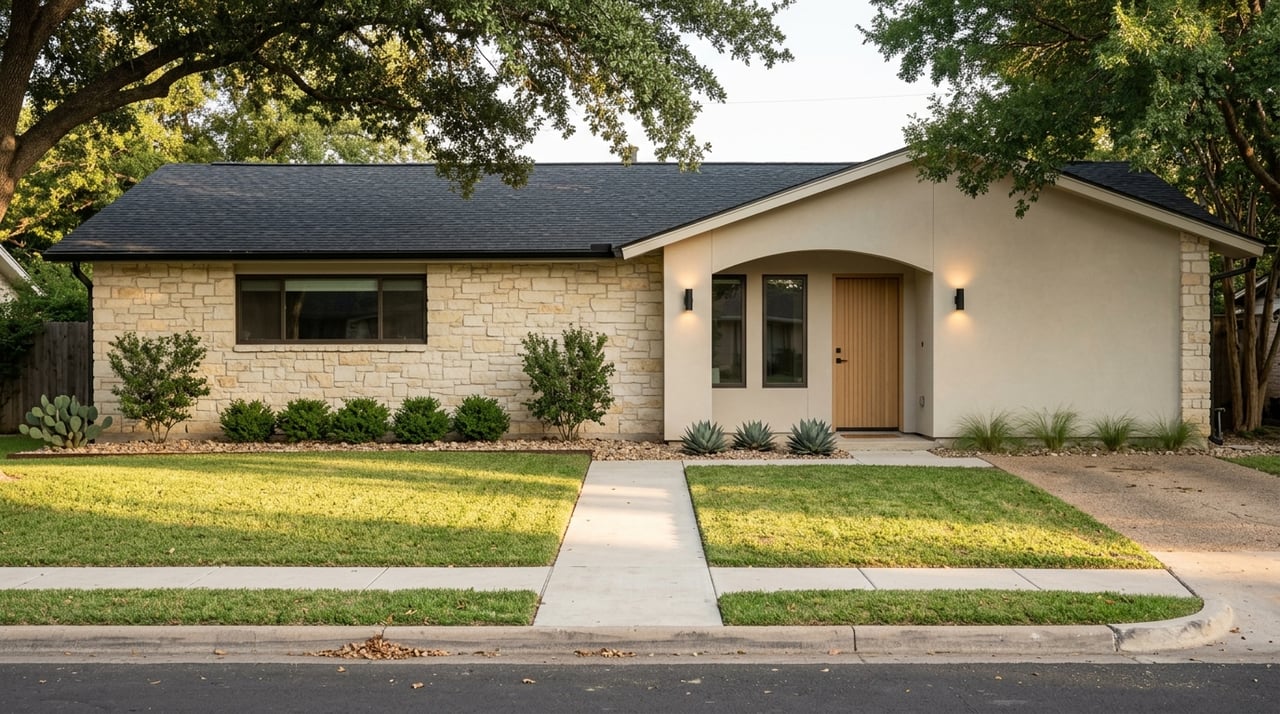
Castle Hills Custom Homes Guide: Updated or Original?
June 4, 2026
June 4, 2026
Wondering whether a custom build, a fully updated house, or an original home makes the most sense in Castle Hills? You are not alone. In this part of the San Antonio area, the decision is rarely just about finishes or square footage because lot size, trees, zoning, and permit history can shape value just as much as the home itself. If you are weighing your options, this guide will help you compare the tradeoffs and move forward with more confidence. Let’s dive in.
Castle Hills has remained a private residential community with large lots and abundant trees since its 1951 incorporation. That local character gives the area a very specific feel and also affects how buyers should evaluate homes.
In many neighborhoods, buyers focus mostly on layout and upgrades. In Castle Hills, the land often matters just as much. Lot size, setbacks, mature trees, easements, and the buildable envelope can all influence whether a property is a smart fit for your goals.
When you shop in Castle Hills, you will usually see one of three broad options. Each one offers a different balance of character, convenience, cost, and risk.
Because Castle Hills incorporated in 1951, much of the original housing stock can reasonably be treated as mid-century by inference, though each property still needs to be verified individually for age, condition, and permit history. These homes often sit on established lots with mature trees, which is a big part of their appeal.
The tradeoff is uncertainty. Older homes may come with unknowns in systems, layout, and past work, especially if changes were made over time without clear records.
A renovated home can offer a shorter move-in timeline and less immediate project management. If you want Castle Hills lot size and setting without taking on a major renovation yourself, this option can be very appealing.
That said, not every renovation is equal. A house may look updated on the surface, but buyers still need to confirm whether the work was permitted and inspected when required.
For some buyers, the lot is the prize. A teardown or custom build can make sense when the location is strong and the parcel has a workable shape, manageable trees, and clean utility or easement conditions.
This path offers the most control, but it usually demands the most flexibility on budget and timing. In Castle Hills, custom projects are shaped by zoning, permitting, survey work, and tree rules as much as by design ideas.
Castle Hills zoning is a major part of the value equation, especially in the A single-family district. The city limits use to single-family residences and customary accessory buildings, requires a minimum 1,800-square-foot living area, allows a maximum height of two stories or 35 feet, and requires a 14,000-square-foot minimum lot with large setbacks.
Those standards matter whether you are buying an original house, considering an addition, or planning a rebuild. The lot may look large, but the actual buildable area can be more limited than you expect once setbacks and coverage limits are applied.
In the A district, building coverage is limited to one-third of the lot. Additions also may not protrude past the front house line, and exterior finish materials for permitted additions must be similar to the main structure.
If you love the idea of a home with original charm on a tree-filled lot, Castle Hills can be a great match. These homes often attract buyers who want character, space, and the option to improve the property over time.
The key is to budget for surprises. Older systems, dated layouts, and undocumented work can all affect your true cost after closing.
Because the city requires permits for many residential projects, permit history matters. Work that started without a permit is subject to a double fee, which is one more reason to review records carefully when you are evaluating an older property.
You may prefer an original home if you:
A fully renovated home can be the easiest path if you want to move in quickly. It may also reduce the need to coordinate contractors right away, which can be a major benefit for busy households or relocation buyers.
Still, updated does not always mean rebuilt to current standards. In Castle Hills, completed plan renderings are required for new construction, remodeling, and additions, and plan review generally takes 10 to 15 working days.
That means a substantial remodel should usually leave a paper trail. If a seller describes a property as fully renovated, it is smart to confirm what work was done, whether permits were required, and whether inspections were completed.
It also helps to understand the difference between cosmetic work and structural or systems work. The city says routine maintenance such as interior and exterior painting, minor roof repairs, and asphalt driveway repair or replacement does not require a permit, while larger remodels and additions do.
You may prefer an updated home if you:
A custom build can be exciting because you shape the home around your needs. In Castle Hills, though, the process starts with the lot, not the floor plan.
Before a project moves forward, buyers should study the survey, site plan, easements, tree placement, and utility conditions. The city requires a site plan or survey for new construction and several exterior projects, including accessory buildings, decks, driveway approaches, fences, and pools or spas.
Costs can also add up in ways buyers do not always expect. Castle Hills lists a $60 residential demolition permit and a stormwater development fee of $0.40 per square foot of new impervious cover.
If a lot needs rezoning or a special use permit, the timeline can stretch further. Castle Hills uses a public hearing process with mailed notices to nearby owners and sign posting on the property for those requests.
You may prefer a custom build if you:
Castle Hills is especially lot-sensitive, and mature trees are a major part of its appeal. They are also a practical planning issue for buyers considering updates or new construction.
Residents may trim their own trees at the home they occupy without a permit, but compensated contractors and tree trimmers must obtain a permit. Oak trimming is prohibited from February 1 through June 30, oak cuts must be painted within one hour, permits are valid for 30 days, and trimmings must be removed within 48 hours.
There are also ongoing maintenance rules. Overhanging trees must maintain 14 feet of clearance above the street or 12 feet above the sidewalk.
Easements deserve the same level of attention. Property owners are responsible for keeping easements clear of debris and vegetation, including tree growth into overhead utility lines, so survey review and easement mapping are important before a teardown or major addition.
Utility setup and city services also affect daily life and cleanup planning. Castle Hills residents begin water service through SAWS, and SAWS also arranges trash service for the city. Public Works provides garbage collection twice per week, leaf collection once per week, brush collection once per week, and recycling once per week.
No matter which home type you choose, permit review should be part of your process. Castle Hills has adopted the 2021 ICC Codes and the 2020 Energy Conservation Code, so current code compliance is worth checking when you are buying a renovated home or planning new construction.
The city also expects contractors or licensed trades to obtain permits, while homeowners doing allowed DIY work can obtain permits themselves. That can help you ask better questions about who completed the work and whether it followed the city process.
For extra reassurance after a major renovation or new build, Castle Hills says a residential certificate of occupancy is recommended and has no fee. That is a useful item to ask about when recent construction is part of the sales story.
If you want character and are comfortable with future projects, an original home may be the right fit. If you want convenience and a faster timeline, an updated home may give you the balance you want.
If the lot matters most and you have room in your budget and timeline, a teardown or custom build may be worth exploring. In Castle Hills, that decision often comes down to how much process you want to manage and how much flexibility you have for unknowns.
The best move is usually the one that matches both your lifestyle and your tolerance for project complexity. In a market like Castle Hills, experienced local guidance can help you look beyond finishes and focus on the factors that truly affect long-term value.
If you are comparing homes in Castle Hills and want a clear, local perspective on lot potential, permit questions, and resale considerations, reach out to Melisa Fitchett for thoughtful guidance tailored to your move.
Stay up to date on the latest real estate trends.
Ready to find your dream home in San Antonio? Partner with Melisa Fitchett, your dedicated Real Estate Agent with an in-depth knowledge of the area and a commitment to providing exceptional service. Whether you're looking for a cozy neighborhood in Timberwood Park or exploring vibrant communities like Bulverde, Spring Branch, Boerne, and the Hill Country, Melisa's keen eye for details ensures a seamless and rewarding real estate experience.