What to Know About Bulverde and Spring Branch Acreage
May 28, 2026
May 28, 2026
If you are dreaming about more space, a workshop, room for animals, or simply Hill Country views and privacy, buying acreage in Bulverde or Spring Branch can feel like a big step up from a typical neighborhood home. It can also come with a very different set of questions, because you are not just buying a house. You are often buying land systems, access rights, and ongoing maintenance responsibilities too. This guide will help you focus on the details that matter most so you can move forward with more confidence. Let’s dive in.
Buying acreage in Bulverde and Spring Branch usually means evaluating more than square footage, finishes, and floor plans. Many properties depend on private wells, on-site sewage facilities, private roads, gates, easements, fencing, and land upkeep.
That changes how you should approach due diligence. Instead of thinking only like a homebuyer, you also need to think like a land steward. The goal is to understand how the property functions day to day and what it may cost to maintain over time.
On many acreage properties in Comal County, city-style utilities are not part of the setup. That means your early questions should focus on water, wastewater, access, and maintenance records.
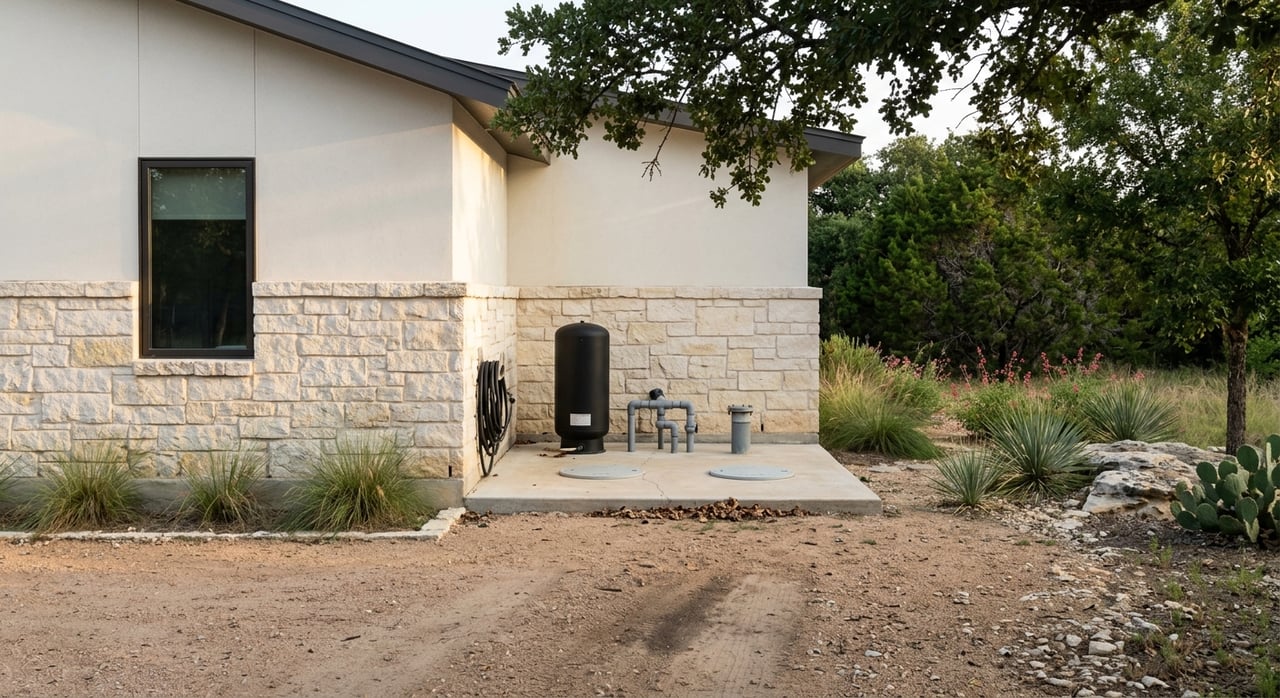
Comal County Environmental Health oversees on-site sewage facilities, and buyers should ask for permits, plans, and service history when available. For private wells, it is smart to request water-test results, maintenance records, and any paperwork tied to drilling or alterations.
Getting these answers up front can save you time, money, and surprises during the option period.
A private well can be a great feature, but it also comes with owner responsibility. EPA notes that private wells are not regulated the same way public water systems are, and CDC says the well owner is responsible for testing and ongoing safety.
CDC recommends at least annual testing for total coliform bacteria, nitrates, total dissolved solids, and pH. Additional testing is recommended after flooding, repairs, or noticeable changes in taste, smell, or color.
In this area, the Comal Trinity Groundwater Conservation District adds another important layer. The district states that all non-exempt wells must be registered, and written authorization is required before a well is drilled or altered.
The district also says domestic and livestock wells that cannot produce more than 25,000 gallons per day are exempt from production fees, and those domestic or livestock wells do not require meters. For buyers, this means you should confirm whether the well is exempt or non-exempt and ask for any available district paperwork.
A well is not just a box to check. It is one of the most important systems affecting your comfort, cost, and confidence in the property.
For many acreage homes, the septic system is just as important as the well. In Comal County, Environmental Health reviews OSSF designs and issues permits. The county states that approved plans and permits are required before building, altering, extending, or operating an OSSF.
TCEQ also states that OSSF design depends on a site and soil evaluation by qualified professionals. That means septic design is not one-size-fits-all. It should fit the land conditions and the intended use of the property.
A septic system is not something to ignore after move-in. Comal County says that for a single-family home, an owner may maintain their own aerobic OSSF without training or routine county reporting, but if the county finds violations, the owner must correct them promptly and may be required to enter a maintenance contract.
For buyers, the takeaway is simple. Treat the septic system like a living, operating part of the property, not a one-time installation.
These are practical questions that can help you avoid expensive issues after closing.
Some acreage homes in Bulverde and Spring Branch sit on private roads or use shared easements for access. That may sound simple at first, but it can affect maintenance costs, emergency access, financing, and even insurance.
Comal County subdivision rules require a maintenance plan for private roads and easements. The county also requires proof of access rights when a private road connects to an existing private road, and gated entrances must preserve emergency access, including a 40-foot turnaround outside the gate.
A property can have a beautiful setting and still present problems if the access story is unclear. Texas guidance notes that landlocked property generally needs an easement for legal access, and maintenance often depends on the written easement terms or common law.
That is why recorded documents matter so much on acreage. Before you move ahead, you want to understand who has the right to use the road, who maintains it, and what obligations come with that access.
Fencing can be a major part of acreage living, especially if you want privacy, pets, or livestock use. But fence ownership and maintenance are not always automatic.
Texas guidance says a landowner generally does not have to share the cost or future maintenance of a boundary fence built by a neighbor unless there is an agreement to do so. In some communities, property owners associations may regulate appearance or fence type, even if certain perimeter security fencing cannot be prohibited outright.
That makes it worth asking a few direct questions before you buy. You want to know which fences are on the property line, who installed them, and whether any maintenance expectations are documented.
Acreage buyers are often drawn to the possibility of lower property taxes through agricultural or wildlife valuation. In Comal County, that can be helpful, but it is not automatic and should never be assumed.
Comal Appraisal District says land designated for agricultural use is appraised on productive capacity rather than market value. The district also states that wildlife management special appraisal is available only if the land already qualified as 1-d-1 open-space land in the prior year and the owner submits a wildlife management application and plan for approval.
The district’s open-space guidelines note that approved wildlife management properties must submit an annual report. The guidelines also explain that open-space valuation may require five of the prior seven years of agricultural operation, and late filing can trigger a 10 percent penalty. If ag use stops, rollback tax may apply.
In plain terms, you should verify the current appraisal status during your option period and ask what may change after closing. A seller’s current tax treatment may not transfer in the same way to you.
Insurance for acreage property may be more complex than insurance for a typical subdivision home. The land, distance from services, wildfire exposure, outbuildings, fences, and flood risk can all influence your options and costs.
The Texas Department of Insurance says standard home policies generally cover fire, windstorm, hail, and other structures such as fences, but they do not cover flooding. A separate flood policy is needed when flood risk warrants it.
TDI also notes that flooding can happen outside designated flood zones, and Texas flash-flood exposure is a concern across Central Texas. On the wildfire side, Texas A&M Forest Service says risk increases in wildland-urban interface areas, where developed land meets wildland.
For buyers in Bulverde and Spring Branch, this is an important conversation to have early. You may want to look at both flood exposure and wildfire defensible-space needs before you finalize your purchase decision.
If a standard insurer declines the property, TDI says the Texas FAIR Plan may be available after at least two declinations, though coverage is limited.
One of the biggest mindset shifts with acreage is understanding the ongoing care involved. This is not always a set-it-and-forget-it ownership style.
A realistic budget may include well testing, septic service, brush control, mowing, fence repair, road upkeep, gate maintenance, and in some areas, wildfire mitigation work. These costs can add up, but they are part of what keeps an acreage property functional and enjoyable.
If you love the idea of more land, this does not have to be a drawback. It just means you should go in with clear expectations and a plan.
Acreage homes can be incredibly rewarding when you buy with the right information. The key is to slow down, ask system-specific questions, and verify details that may not come up in a standard neighborhood purchase.
In Bulverde and Spring Branch, that usually means focusing on five core areas first:
When you evaluate both the house and the land systems together, you are much more likely to make a confident decision that fits your goals.
If you are exploring acreage homes in Bulverde or Spring Branch and want a local guide who understands how these properties differ from a typical suburban purchase, Melisa Fitchett can help you navigate the details with clear, thoughtful support.
Stay up to date on the latest real estate trends.

Ready to find your dream home in San Antonio? Partner with Melisa Fitchett, your dedicated Real Estate Agent with an in-depth knowledge of the area and a commitment to providing exceptional service. Whether you're looking for a cozy neighborhood in Timberwood Park or exploring vibrant communities like Bulverde, Spring Branch, Boerne, and the Hill Country, Melisa's keen eye for details ensures a seamless and rewarding real estate experience.